
Medium Exposure to China Sourcing Risk
Your results show a medium level of exposure when sourcing from China.
You are not unprepared — but you are not fully protected either.
Buyers in this range often believe they are “mostly ready.”
In reality, they are standing at the point where small gaps start creating real costs.
What Your Answers Reveal
Your responses suggest that you have some structure in place, but several key elements are still incomplete or inconsistent.
This creates a situation where progress is possible —
but control is fragile.
Partial Product & Market Clarity
You likely have:
a general idea of what you want
a sense of your target market and price range
However, partial clarity often leads to:
assumptions instead of confirmations
specifications that change mid-discussion
suppliers adjusting details “to help you move faster”
At this level, sourcing does not fail loudly.
It fails quietly, through small deviations.
Negotiation & Expectation Gaps
Medium exposure buyers often experience:
quotations that shift with context
MOQs that suddenly change
timelines that feel agreed, but not locked
Nothing appears wrong — yet nothing feels firm.
This usually happens when:
expectations are not fully documented
negotiation logic is understood intuitively, not structurally
Suppliers respond — but they do not commit.


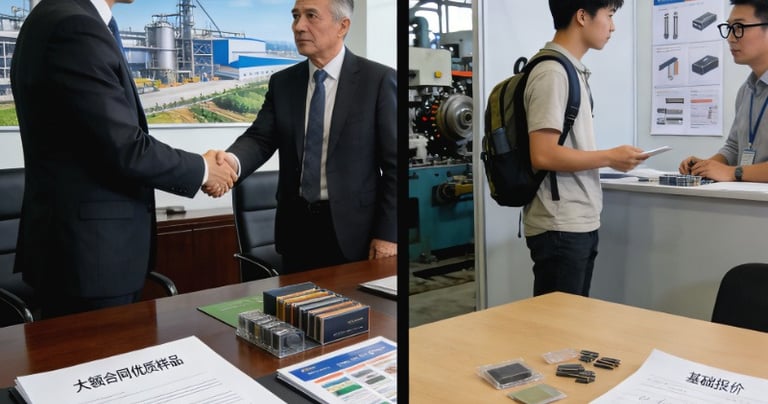
Control Exists — But Is Not Consistent
You may already:
understand the importance of written agreements
know inspections matter
have some import awareness
But if these controls are applied inconsistently, risk remains.
China sourcing rewards repeatable structure, not good intentions.


Why Medium Exposure Is the Most Dangerous Zone
This is where many buyers lose the most.
Why?
Because confidence rises faster than control.
Buyers at this stage often:
move faster than their structure allows
rely on “last time worked fine” logic
assume the next order will behave the same
This is where preventable losses usually occur.
What You Should Do Next
You do not need to start from zero.
But you do need to systemize what you already know.
The priority now is to:
tighten supplier selection logic
control samples, pricing, and expectations
understand how negotiations actually unfold in practice
This is exactly the focus of Module 3 & 4.
They help you move from:
“I think this should work”
to
“I know where my leverage is.”
Your Next Step
Turn partial readiness into controlled execution.
👉 Continue with Module 3 & 4:
Supplier Control, Negotiation & Risk Reduction