Navigating Cultural Differences & Business Etiquette in China: Insights from an Ethiopian UN Worker
Negotiation Styles: Beyond Agendas, Toward Relationships
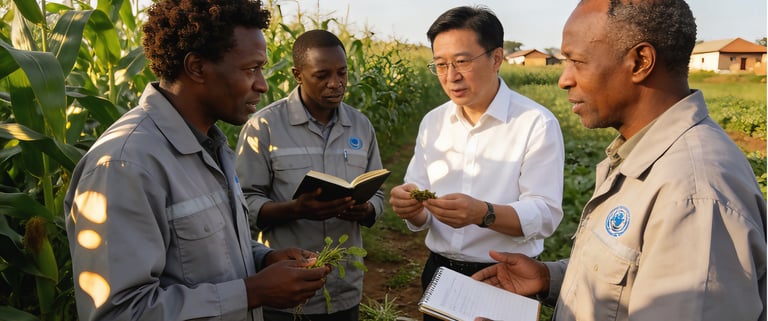
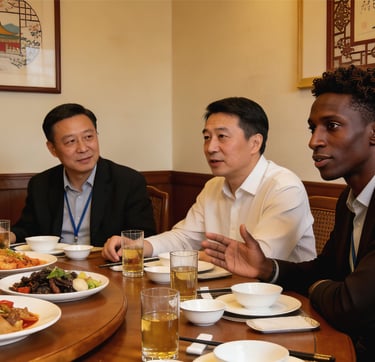
My first joint meeting with Chinese agricultural officials and local tech suppliers was a pivotal moment. I arrived with a detailed UN project roadmap, ready to discuss timelines, resource allocation, and deliverables. Instead, the first 90 minutes were spent talking about my hometown in Ethiopia, the beauty of the Simien Mountains, and their recent visits to Ethiopian coffee farms. I felt restless initially—was this diverting from the task at hand? A senior Chinese colleague later clarified: Trust is built on familiarity. We need to know your values and background before committing to a partnership.
Building Trust: Long-Term Rapport in Diplomatic & Business Contexts
One of our key Chinese partners, a tech firm specializing in agricultural innovation, didn’t fully commit to our project until our fourth interaction. The first three meetings included shared meals, a visit to their research facility (where they walked me through every process, not just the highlights), and genuine curiosity about Ethiopia’s smallholder farming practices. I brought traditional Ethiopian gifts: handwoven cotton scarves (netela) and a tin of single-origin Yirgacheffe coffee—tokens of respect, not formality. These exchanges weren’t about diplomacy; they were about showing I valued them as partners, not just service providers.
Dietary & Daily Adjustments: Small Shifts That Shape Professional Presence
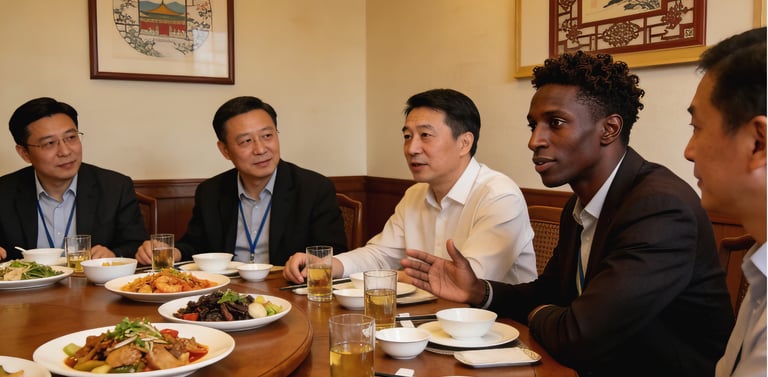
Food is central to Chinese business and diplomatic culture—meals are where relationships deepen, and turning down a dish or struggling with chopsticks can feel awkward. Ethiopian cuisine is flavorful but Chinese has its regional featured big varieties of dishes; Sichuan’s spiceful, Beijing/Haerbin is salty, Shanghai is sweet, and Taiyuan cookings are mostly with vinegar. Portion sizes are another adjustment—Ethiopian meals are personally served(unless salads and other dishes for share), while Chinese dishes are mostly for sharing. At first, I worried about appearing ungrateful by not finishing food, but I’ve learned to speak up politely and laugh off my chopstick mishaps. Authenticity, it turns out, is more endearing than perfection.
Final Thoughts: Bridging Cultures Through Curiosity
My time in China has reinforced that cultural differences aren’t barriers—they’re bridges to more meaningful partnerships. As an Ethiopian UN worker, I bring the communal values of my homeland, where collaboration is rooted in respect for shared humanity. By embracing Chinese customs—valuing guanxi, prioritizing face, and taking the time to connect—I’ve built partnerships that go beyond project goals.
Stay Informed
Get updates on sourcing tips and new guides